Sweet Sedition
is an early moving image work for Soho patisserie, Maison Bertaux, set to Rachmaninoff's second piano concerto.
The catalyst for the work was the artist's chance sighting of a young man who resembled a former lover:
how curious that there should be someone at Maison Bertaux who was the image of you, your double, a lover approximated.
The artwork was originated in Adobe's Flash format, which is now defunct. Only a low resolution version of the work survives, salvaged from Apple's quicktime format.
There are stylistic similarities to
Untitled (Fly-posters)
(2001.1.1-2001.1.3)
and the recurring desire to be wounded by the desire to love and be loved (see also
Take Me, Make me Mad
(2001.2.c)
The work was supported by the now-defunct
International Herald Tribune
for which Firrell created the arts season
Breathless...
(after the 1960 Jean-Luc Godard film) in 2005.
The complete text of
Sweet Sedition
reads:
All the world's an impossibility, a kind of tragic, beautiful impossibility: all that might have been.
This cafe is the scene, the setting for a love that will echo through memory, written out, along with Europe, the fate of Europe. This cafe, immense beauty, ravishing.
And how curious that there should be someone at Maison Bertaux who was the image of you, your double, a lover approximated.
I will use you, if you're capable of it, to wound myself on the impossibility of love between us, for the sake of expression, for reasons of the spirit, freedom, writing.
I was never young. I was old at nineteen. I was never without responibility to myself, to writing, to time. I never felt that time was inexhaustible.
The return to writing, to memory, to that madness, to that anguish, always the familiar stirring of pain, ineptitude, desire.
You said, you could always see the end of an affair before it began.
The sweet majesty of feeling, the unhinged, deranged quality of it. A kind of loving, hurt, wounded, awareness. Something that could endure forever, for our whole lives, a myth, a whisper, something overheard or assumed.
You said, you were properly alive, across a cafe table, in that wildness of loving.
The important question, something critical, strong: the profound morality of seizing even the possibility of happiness.
Place your faith in good butter and better motives, and isn't it abundantly clear we all do our best, each of us in our own way?
I look at you. And you are not a real thing to me. Tragic. A shock to the system: that impossible sweetness, that gentleness.
Suddenly there are no endless summers, no sudden passions, only the immense and extraordinary responsibility of the life you have already made for yourself.
The extreme antiquity of Europe, and what has passed is ages old, and always the same, the impossibility of love, those attempts at happiness, flung out across a ruined, exhausted Europe.
You're reached into, you're taken by the immensity, the overwhelming immensity of made things: music, paintings, writing, books, lives, wars, loss.
And what if everything came to naught in the horror of failed desire? I see you. As if all of Europe, our home, came to naught in the failure of feeling between us, the failure of all things in time, nationhood, empire, desire.
Endlessly, the life of this cafe, sweet sedition, so that there is no quickness to judge but an impish openness, something iced and brightly coloured, something incredibly sweet.
Perhaps what's needed is a return to the great days of the cafe, a revolution of sweetness.
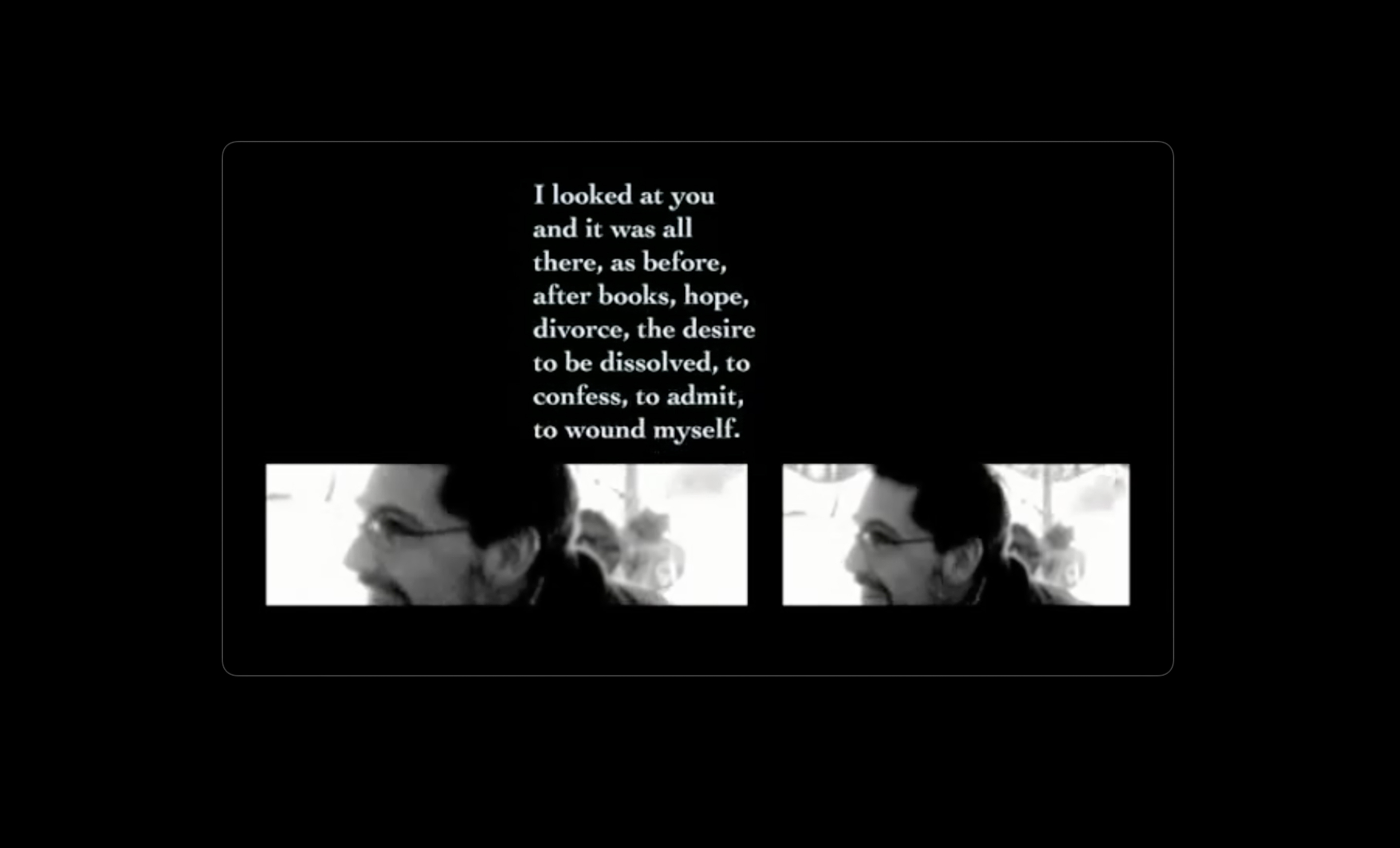
I looked at you and it was all there, as before, after books, hope, divorce, the desire to be dissolved, to confess, to admit, to wound myself.
There is no emptiness outside of writing, outside or beyond art. There could never be an emptiness greater than that. I cannot bring myself to believe in the failure of art.
And when all's said and done, this is what remains: a recording of Rachmaninoff, and the strangeness of the young man from the far corner of Europe who knew this music.
And in all its monumentalness, the horror of desire derailed.